Walking pads have changed how people stay active at home, and the HomePoweron Walking Pad Reviews you'll find below explain why this model keeps coming up in conversations about compact fitness gear. If you want to move more during your workday without committing to a bulky treadmill, this device promises a slim, foldable design that slides under a desk or bed. But does it actually hold up to daily use? You're about to get a clear, practical breakdown of what works, what doesn't, and who this walking pad fits best.
Here's the promise: by the end of this HomePoweron Walking Pad Reviews, you'll know the key features, how it performs over time, its honest pros and cons, how it stacks up against competitors, and answers to the questions buyers ask most.
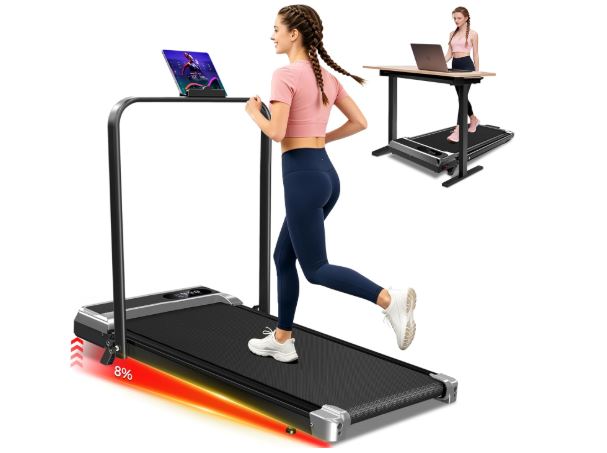
- Compact, foldable design that fits small spaces
- Quiet motor suitable for offices and shared rooms
- Easy remote and app control with useful tracking data
- Stable belt and sturdy steel frame
- Energy-efficient operation for all-day use
- Simple setup with minimal assembly
The HomePoweron walking pad earns attention because it focuses on the features most home users care about: a small footprint, quiet operation, and simple controls. The HomePoweron Walking Pad Reviews consistently point to these five features as the reasons the unit stands out in a crowded market.
Slim, Foldable Design
The frame folds flat to a few inches in height, which means you can store it upright in a closet or slide it under a couch. For anyone working in a small apartment, this matters more than raw treadmill power. You get a usable workout surface without giving up floor space the rest of the day. The build feels sturdy despite its thin profile, so it doesn't wobble during steady walking.
Quiet Motor
A walking pad in a shared space lives or dies by its noise level. The HomePoweron uses a low-decibel motor that lets you hold a video call or watch a show while you walk. You'll hear a soft hum rather than a grinding drone. That quiet performance makes it realistic to use during work hours instead of saving it for a dedicated gym block.
Remote and App Control
You control speed with a handheld remote, and the companion app tracks steps, distance, calories, and time. This combination keeps you from bending down mid-stride to adjust settings. The data syncing also helps you set goals and watch progress week to week, which keeps motivation steady.
Adjustable Speed Range
The speed range covers a slow stroll up to a brisk pace, typically around 0.5 to 4 mph depending on the configuration. That range suits walking rather than running, which is exactly the point. You can match the pace to your task, walking slower while typing and faster during breaks.
Safety and Auto-Stop Functions
The pad includes an automatic slowdown and stop feature when it detects you've stepped off, plus a non-slip running belt. These touches reduce the risk of stumbles and give you confidence to glance away at your screen. For households with curious kids or pets, the auto-stop adds a useful layer of protection.
HomePoweron Walking Pad Review - Performance Overview
Performance is where the HomePoweron Walking Pad Reviews move from spec sheets to real life. The unit is built for consistent, low-impact movement rather than intense cardio, and it delivers reliably within that lane. Below is how it holds up across the measures that matter day to day.
Daily Walking Endurance
The motor handles several hours of continuous walking without overheating, which is the main test for desk users. If you spread your steps across a workday, the pad keeps pace without slowing or stalling. Heavier or all-day use pushes it harder, but most users report steady operation over months.
Belt Stability and Traction
The running belt stays centered and grips well, so your stride feels secure even at the higher end of the speed range. You won't feel the belt slipping under your feet, a common complaint with cheaper models. Good traction translates directly into a more comfortable, confident walk.
Weight Capacity and Build Quality
The pad supports a generous weight range and uses a steel frame that resists flex. That structural strength explains why it feels stable while remaining thin. You can trust it to carry your full body weight without creaks or bounce, which protects both your joints and the machine.
Battery and Power Efficiency
The motor draws modest power, so running it through a workday won't spike your electricity bill noticeably. Efficiency like this makes the pad easy to justify as an everyday tool rather than an occasional gadget.
HomePoweron Walking Pad - Pros and Cons
Every product involves trade-offs, and a balanced view helps you decide with clear eyes. Here are the pros and cons drawn from common user experiences.
Pros:
- Compact, foldable design that fits small spaces
- Quiet motor suitable for offices and shared rooms
- Easy remote and app control with useful tracking data
- Stable belt and sturdy steel frame
- Energy-efficient operation for all-day use
- Simple setup with minimal assembly
Cons:
- Speed range suits walking, not running
- App connectivity can occasionally drop and need reconnecting
- Higher weight than some ultralight competitors makes carrying it less convenient
- No incline option for those wanting a steeper challenge
- Customer support response times vary
HomePoweron Walking Pad Reviews Comparison with Similar Brands
When you weigh the HomePoweron Walking Pad Reviews against rivals like WalkingPad, Sperax, and UREVO, a few patterns appear. The HomePoweron competes most directly on quietness and build stability, often matching or beating budget brands on both. Compared to premium models that include folding handrails or running speeds, it sits in the value middle: more capable than entry-level pads, less feature-heavy than the priciest options.
Against the WalkingPad A1, for example, the HomePoweron offers comparable portability with a slightly stronger frame. Versus UREVO's running-capable treadmills, it trades top speed for a thinner, easier-to-store profile. If your goal is steady daily walking rather than jogging, the HomePoweron delivers the better balance of price, quiet operation, and footprint. Buyers chasing high-speed running or incline training will likely look elsewhere.
HomePoweron Walking Pad Reviews - FAQ
Is the HomePoweron Walking Pad suitable for running?
The HomePoweron is designed primarily for walking and light jogging rather than full running. Its top speed typically reaches around 4 mph, which supports a brisk walk or a gentle jog but not a sustained sprint. The slim, deck-only design also lacks handrails, which most runners rely on for balance and safety at higher speeds. If your goal is daily step counts, low-impact movement, and staying active while you work, the pad fits perfectly. If you want serious cardio with running speeds above 6 mph and incline settings, a full treadmill will serve you better. Matching the machine to your intended pace is the single most important factor in being satisfied with your purchase.
How much space does it need for storage?
One of the biggest selling points is how little space it requires. When folded, the pad stands only a few inches tall, letting you slide it under a bed, sofa, or desk, or stand it upright against a wall. In use, you'll want a clear area roughly the length of a standard treadmill belt plus room to step on and off safely. Because it weighs more than the lightest ultraportable models, plan to keep it in a spot where you won't need to carry it far. Many users leave it permanently under a standing desk, pulling it out only when they want to walk, which removes the storage question entirely.
Does it require assembly?
Setup is refreshingly simple. The HomePoweron arrives mostly pre-assembled, so you typically unbox it, unfold it, plug it in, and pair the remote or app. There are no complicated tools or lengthy instruction manuals to work through. Most people are walking within ten to fifteen minutes of opening the box. This ease of setup is a frequent highlight in user feedback, especially for buyers who dread complicated fitness equipment. The minimal assembly also means fewer parts that can loosen or fail over time.
How accurate is the step and calorie tracking?
The tracking data gives you a useful guide rather than medical-grade precision. The app counts steps, distance, time, and estimated calories based on your speed and duration. Step and distance readings tend to be reliable because they tie directly to belt movement. Calorie estimates are approximations, since they don't account for your exact weight, age, or effort unless you input that data. For goal-setting and tracking trends week over week, the numbers work well. If you need exact calorie burn, pair the pad with a dedicated fitness tracker or heart rate monitor for a fuller picture.
How long does the motor last with daily use?
The motor is built for consistent daily walking and holds up well under that kind of routine. Used for several hours a day at walking speeds, most owners report smooth operation lasting well over a year without performance drops. The key to longevity is using it within its intended range: keep speeds in the walking band, stay within the weight capacity, and lubricate the belt occasionally as the manual suggests. Pushing it toward continuous high-speed use shortens its lifespan, but for the typical desk-walker, the motor handles the workload reliably for the long term.
Conclusion
The HomePoweron Walking Pad Reviews point to a clear conclusion: this is a smart pick for anyone who wants to add steady, low-impact movement to a busy day without sacrificing space or quiet. It shines at walking, offers stable build quality, and keeps controls simple, though it isn't the right choice if you're after running speeds or incline training. Match it to your goals, and you'll get a reliable daily companion that fits under your desk and into your routine. Your next step is easy: measure your available space, confirm your pace needs, and decide whether the HomePoweron's strengths line up with how you plan to move.