Finding a safe way to exercise with weakened bones can be a challenge, but identifying the best vibration platform for osteoporosis can open new doors to physical wellness. Unlike high-impact activities that might pose a risk of fracture, vibration therapy uses gentle, mechanical oscillations to stimulate bone cells and muscle fibers. This low-impact approach is gaining popularity as a supplemental therapy to help maintain bone density and improve balance.
In this Best Vibration Platform For Osteoporosis Reviews article, we will examine the top-rated platforms available today, focusing on features that ensure safety, stability, and effectiveness for those managing osteoporosis.
Top 10 Best Vibration Platform For Osteoporosis
Image | Name | Key Feature | Ratings | Price |
|---|---|---|---|---|
 |
| (3460 Reviews) | ||
 |
| (1691 Reviews) | ||
 |
| (224 Reviews) | ||
 |
| (2176 Reviews) | ||
 |
| (1140 Reviews) | ||
 |
| (903 Reviews) | ||
 |
| (221 Reviews) | ||
 |
| (570 Reviews) | ||
 |
| (115 Reviews) | ||
 |
| (87 Reviews) |
Best Vibration Platform For Osteoporosis Review
Natini Vibration Platform For Osteoporosis
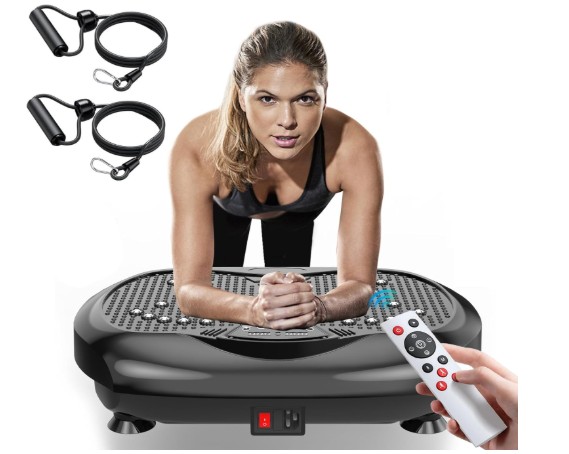
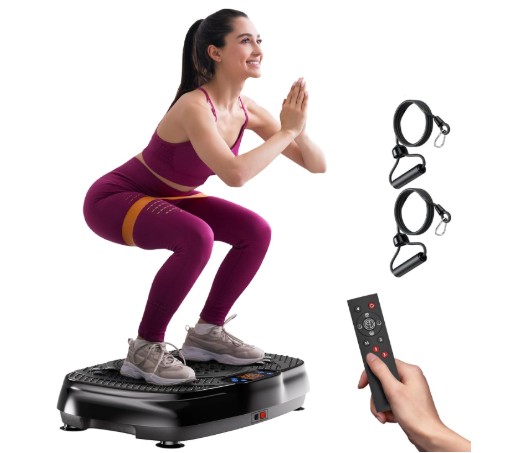
The Natini Vibration Plate is widely recognized as a versatile choice for home use, offering a balance of power and gentleness that is essential for therapeutic applications. Its motor is engineered to provide smooth, consistent vibrations that can be adjusted across a wide range of speeds, allowing users to start with very mild stimulation and progress slowly. This control is vital for preventing over-exertion or discomfort in sensitive joints. The unit features a textured anti-slip surface that provides excellent grip, a crucial safety factor for preventing slips during use. Additionally, it includes resistance bands that attach to the base, enabling users to perform light upper-body strengthening exercises simultaneously, making it a holistic tool for maintaining overall muscle tone and bone health.
Pros:
- Wide speed range suitable for gentle progression
- Textured anti-slip surface for safety
- Includes resistance bands for full-body workouts
- Compact and easy to store
Cons:
- Remote control range can be inconsistent
- Power cord is relatively short
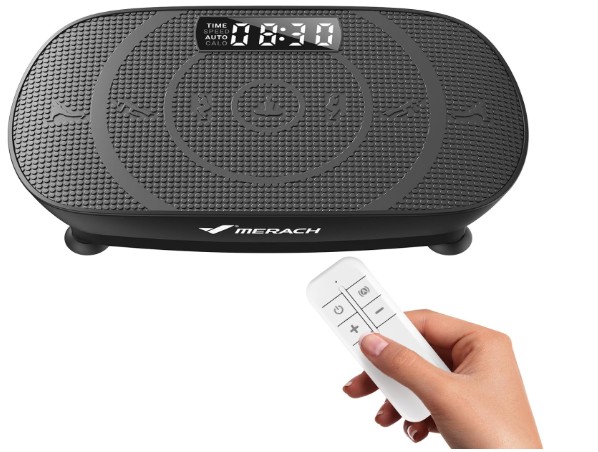
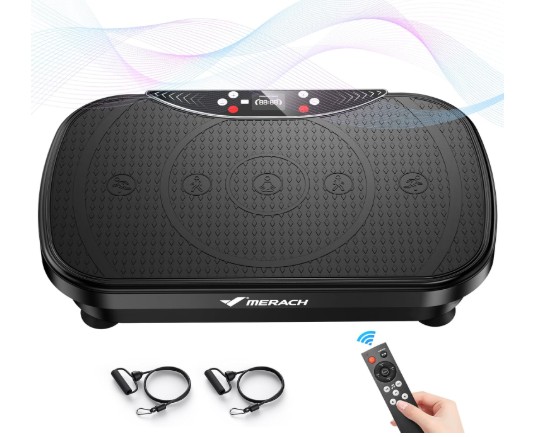
Merach delivers a vibration platform that excels in stability and user comfort, making it a strong contender for the best vibration platform for osteoporosis. The design features a wider-than-average base, which significantly enhances stability and reduces the fear of tipping over, a common concern for older adults. It operates with a silent drive motor that produces a gentle oscillating motion rather than a harsh buzz, mimicking the natural movement of walking to reduce stress on the spine. The large LED display is bright and easy to read without bending down, and the user interface is intuitive, ensuring a hassle-free experience even for those who are not tech-savvy. Its robust construction supports higher weight limits, adding to the feeling of security during sessions.
Pros:
- Wide base provides superior stability
- Gentle oscillating motion mimics walking
- Large, clear LED display
- Quiet operation suitable for home use
Cons:
- Heavier unit is harder to move around
- Limited variety of pre-set programs
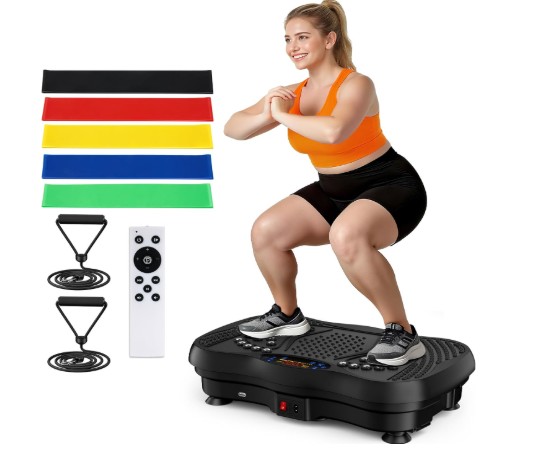
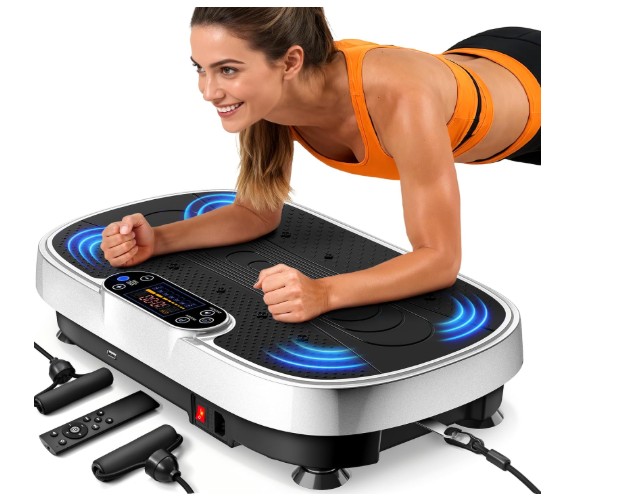
The Glylf Vibration Plate offers a comprehensive approach to wellness, integrating features for lymphatic drainage and circulation alongside bone stimulation. It stands out with its highly adjustable vibration settings, which include very low-intensity options perfect for beginners or those with severe bone fragility. The platform is spacious, allowing for a comfortable stance width that aids in maintaining balance. A unique addition is the built-in Bluetooth speaker system, which allows users to listen to calming music or guided exercise routines, making the daily therapy session more enjoyable and less monotonous. The device is grounded by sturdy rubber suction feet that prevent it from sliding on hard floors, ensuring the platform remains stationary during operation.
Pros:
- Precise low-intensity settings for therapy
- Spacious standing area
- Integrated Bluetooth speakers
- Strong suction feet prevent sliding
Cons:
- Bluetooth audio quality lacks depth
- Instruction manual is somewhat basic
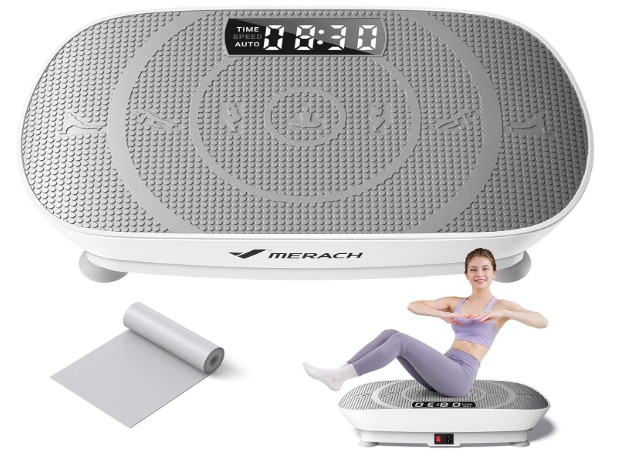
Tisscare has designed a vibration platform with a specific focus on ergonomics and foot health, which translates effectively to whole-body vibration therapy. The surface of the plate is contoured to support the natural arch of the foot, helping to align the ankles and knees correctly—an important feature for protecting joints while using the best vibration platform for osteoporosis. It includes massage nodes that stimulate blood flow in the feet while the vibrations work their way up the legs. Notably, it comes with a wrist-wearable remote control, a thoughtful safety feature that eliminates the need to bend over to adjust settings, thereby reducing the risk of dizziness or falls.
Pros:
- Ergonomic contour supports natural foot alignment
- Wrist-wearable remote enhances safety
- Massage nodes boost foot circulation
- Very quiet motor
Cons:
- Contoured shape may feel unusual initially
- Higher price point than entry-level models
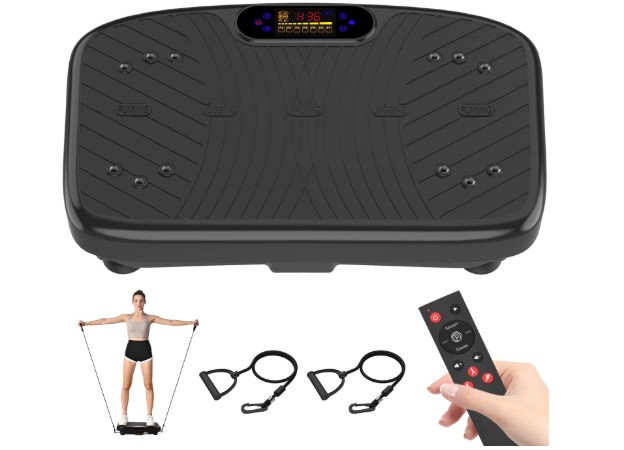
For those seeking an affordable entry point into vibration therapy, the GDCOO Vibration Plate offers solid performance without a hefty price tag. It utilizes linear vibration technology, which is effective for stimulating bone loading in a controlled manner. The machine is lightweight and portable, making it easy to tuck away under a bed or in a closet when not in use. Despite its lighter weight, it is equipped with powerful suction cups on the bottom that anchor it firmly to the floor. The operation is straightforward with simple controls, making it an ideal "no-frills" option for seniors who want to focus purely on the vibration benefits without navigating complex digital menus.
Pros:
- Budget-friendly price
- Lightweight and highly portable
- Strong suction cups for stability
- Simple, easy-to-use interface
Cons:
- Motor is less powerful than premium models
- Plastic casing feels less durable
Best Vibration Platforms For Osteoporosis – Buying Guide
Type of Vibration Motion
Not all vibrations are created equal. The most recommended motion for osteoporosis is oscillation (pivoting like a see-saw). This motion mimics the natural mechanics of walking, shifting the load from one leg to the other, which stimulates the muscles and bones in a functional, rhythmic way. Vertical vibration (up and down) can also be effective but may be too jarring for the spine if the intensity is high. Avoid machines that only offer "tri-planar" or 3D vibration at high speeds, as these are often designed for athletic conditioning and might be too aggressive for fragile bones.
Frequency and Amplitude Settings
The "dose" of vibration is determined by frequency (Hz) and amplitude (mm). For bone density, research suggests a frequency range of 15-30 Hz is therapeutic. The best vibration platform for osteoporosis will allow you to fine-tune these settings. You need a machine that offers low-amplitude options (small movements) so that the vibration is gentle. High amplitude combined with high frequency creates high G-forces, which can be dangerous. Always look for a machine that gives you granular control over the speed levels.
Platform Size and Surface Texture
Safety is the number one priority. A larger platform allows you to stand with your feet wider apart, which creates a more stable base of support and improves balance. A tiny platform forces you to keep your feet together, which can feel wobbly. Additionally, look for a platform with a rubberized, textured surface. This ensures that your feet (whether in socks or shoes) will not slide off, even if your palms get sweaty or you shift your weight.
Accessibility Features (Remote & Display)
Bending down to a floor-level control panel is a major fall risk for anyone with osteoporosis or balance issues. A remote control is non-negotiable. The best options have large, high-contrast buttons or are wearable (like a watch). The display on the machine should also be large and bright so you can see your timer and speed setting from a standing position without squinting. Some machines also offer voice control or app integration, which can further improve accessibility.
Motor Quality and Noise
Since you will likely be using this machine in your living room, noise matters. DC motors tend to be quieter and smoother than AC motors. A jerky, loud motor can make the experience unpleasant and may discourage you from using the machine daily. Look for terms like "silent drive" or check reviews for comments on noise levels. A smooth motor also ensures that the vibration is delivered consistently, without sudden jolts that could startle you or hurt your joints.
Best Vibration Platform Machine For Osteoporosis – Relevant Topics
The Science: Wolff's Law
The effectiveness of vibration platforms relies on a physiological principle called Wolff's Law. This law states that your bones will adapt based on the stress or demands placed on them. When you stand on a vibration platform, the rapid movement increases the gravitational load on your skeleton (G-force). Your body interprets this as increased weight or stress, and in response, your bone-building cells (osteoblasts) become more active to reinforce the bone structure. This allows you to simulate the benefits of weight-bearing exercise without actually lifting heavy weights.
Proper Stance and Posture
How you stand on the machine is critical for safety. You should never stand with your knees locked or legs perfectly straight. This creates a direct column for the vibration to travel straight up to your head, which can cause headaches ("brain shake") or dizziness. Instead, adopt an athletic stance: feet shoulder-width apart, knees slightly bent, and core engaged. This forces your leg muscles to act as shock absorbers, dampening the vibration and ensuring the beneficial stress stays in your hips and femurs where it is needed most.
Combining with Nutrition
Exercise is the stimulus, but nutrition provides the building blocks. Using the best vibration platform for osteoporosis will trigger the body to build bone, but it cannot do so without Calcium and Vitamin D. Protein is also essential for the collagen matrix of the bone. It is vital to view vibration therapy as part of a triad: mechanical stimulation (the machine), chemical resources (nutrition/medication), and hormonal balance. Consult a doctor to ensure your nutritional intake supports your physical efforts.
Frequency and Duration of Use
Consistency is far more important than intensity. Most clinical studies on vibration therapy for bone density involve daily sessions or at least 3-4 sessions per week. However, these sessions are short—typically 10 to 20 minutes. There is no benefit to staying on the machine for an hour; in fact, muscle fatigue can increase the risk of injury. Start with 5 minutes a day and gradually build up to 15 minutes as your muscles adapt to the stimulus.
Fall Prevention Benefits
Beyond bone density, vibration platforms are excellent for fall prevention. The vibration perturbs your balance, forcing your body to make hundreds of micro-adjustments per second to stay upright. This reflex training improves your proprioception (your awareness of your body in space) and strengthens the stabilizer muscles around your ankles and hips. Better balance directly translates to a lower risk of falling in everyday life, which is the most effective way to prevent osteoporotic fractures.
Best Vibration Platform For Osteoporosis – FAQ
Is a vibration platform safe for everyone with osteoporosis?
Generally, yes, but there are exceptions. People with severe osteoporosis (extremely low bone density scores) should consult a doctor before starting, as very intense vibration could theoretically cause a fracture. It is also contraindicated for those with recent fractures, acute blood clots, or recent joint replacements. Always start on the lowest setting to gauge your tolerance.
Can vibration therapy replace my calcium medication?
No. Vibration therapy is a mechanical intervention, while medication and supplements are chemical interventions. They work via different pathways. Vibration provides the signal to build bone, while calcium and medication provide the materials and hormonal environment to execute that signal. They are complementary, not interchangeable.
How long does it take to see results?
Bone turnover is a slow physiological process. It typically takes 6 to 12 months of consistent use to see measurable changes on a bone density scan (DEXA). However, improvements in muscle strength, balance, and reduced joint pain can often be felt within 4 to 6 weeks of regular use.
Should I do exercises on the platform or just stand?
For beginners and those with balance issues, simply standing in a squat position is sufficient to get benefits. As you get stronger, you can perform gentle exercises like squats, calf raises, or weight shifts. Dynamic movement can increase muscle activation, but it also challenges balance, so ensure you have a support rail nearby.
Will the vibration hurt my artificial joints?
If you have had a hip or knee replacement, you must wait until you are fully healed and cleared by your surgeon (usually 6 months post-op). Once healed, vibration can actually help strengthen the bone around the implant. However, excessive vibration could theoretically cause loosening over time, so sticking to low-intensity, therapeutic settings is crucial.
Conclusion
Selecting the best vibration platform for osteoporosis is a strategic investment in your skeletal health and long-term independence. Whether you choose the versatile Natini, the stable Merach, or the ergonomic Tisscare, the key lies in consistent, safe application. By integrating this low-impact therapy into your routine—while maintaining proper posture and nutrition—you can actively stimulate your bones and improve your balance. Remember to start slow, listen to your body, and consult your healthcare provider to ensure your chosen platform perfectly complements your broader wellness plan.